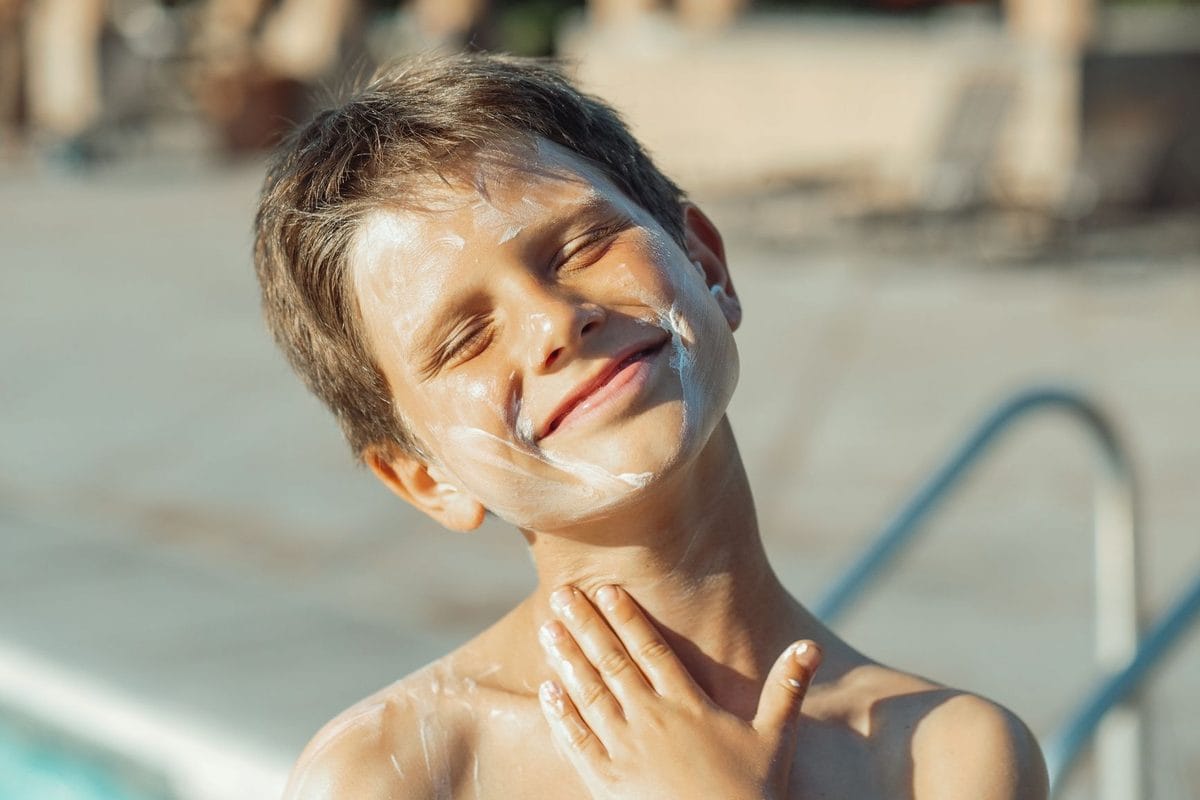
The Two-Hour Rule Isn't a Suggestion — It's Chemistry
Two hours in, and the sunscreen you carefully smoothed on at 8 a.m. is already worth less than you think. That's not a scare tactic from a skincare brand trying to sell you a second bottle — it's how UV filters actually behave once they hit sunlight and sweat. Chemical filters like avobenzone and octinoxate absorb UV radiation and convert it to heat, and that conversion process degrades the filter molecules over time, which is why the FDA's sunscreen monograph (21 CFR 352) still anchors its reapplication guidance to roughly two hours of continuous exposure. Mineral filters, zinc oxide and titanium dioxide, hold up a little better against UV degradation itself, but they physically rub, sweat, and rinse off your skin at a rate that has nothing to do with chemistry and everything to do with friction — a towel, a tote bag strap, a toddler's hand. By early afternoon, most people wearing a single morning application are functionally underprotected, and the SPF number printed on the bottle no longer describes what's actually sitting on their face. That gap between what's on the label and what's actually still working is where a lot of August's sunburns and September's new dark spots actually start.
Where the Two-Hour Number Actually Comes From
The two-hour figure isn't arbitrary. It comes from the standardized testing method the FDA and the American Academy of Dermatology reference, where sunscreen is applied at a fixed thickness — 2 milligrams per square centimeter of skin, which is far more than most people actually use — and then measured for UV protection at intervals. Under real-world application, where most people use roughly a quarter to a half of the tested amount, the SPF rating on the label rarely holds for the full labeled number anyway. Add sweat, humidity, and the light abrasion of a bag strap or a face mask, and two hours becomes generous for a lot of skin types, not conservative.
The Real Reason Nobody Reapplies
Ask most women why they skip the midday reapplication and the answer isn't laziness — it's makeup. Nobody wants to undo an hour of foundation, concealer, and bronzer to smear on a sunscreen that pills, streaks, or turns the whole look grey. That fear is legitimate, and it's also solvable, but it means the real reapplication problem isn't chemistry. It's logistics.
Skip any SPF product that requires you to wipe your face clean before reapplying — that's not a reapplication routine, that's a full reset, and nobody does a full reset at 1 p.m. in a work bathroom. The better move is choosing a format built for going over makeup in the first place, and here the category has genuinely improved over the last few years. Supergoop!'s (Re)setting Powder, around $34, and Colorescience's Sunforgettable Total Protection Brush-On Shield SPF 50, roughly $65, both use a mineral powder delivery that dusts on top of a finished face without disturbing it. They're not a substitute for a real morning layer of SPF 30 or higher — a powder alone won't get you to labeled protection — but as a midday top-up over an already-protected base, they solve the actual problem: reapplying without redoing your face.
How to Reapply Without Wrecking a Full Face
There's a real technique difference depending on what's already on your skin, and most tutorials gloss over it.
- Over bare or lightly moisturized skin: a fluid or milk sunscreen still works fine at midday — La Roche-Posay's Anthelios Melt-in Milk SPF 60 (around $36) presses in within a minute without needing a brush.
- Over full makeup: mineral powder or brush-on SPF is the only format that won't drag pigment around. Tap, don't swipe.
- Over sweat or humidity residue: blot first with a tissue, then apply — sunscreen doesn't bond well to a damp, oily surface, so skipping this step wastes half the product.
- At the hairline and jaw, where powder formulas tend to miss coverage entirely, a spray SPF held six inches away and rubbed in by hand afterward closes the gap.
None of this is complicated once the format matches the situation, and to be honest, most of the frustration people report with SPF reapplication traces back to using a fluid sunscreen on top of makeup and being surprised when it looks bad.
Mineral vs. Chemical: Does the Math Actually Change?
Not as much as ingredient marketing suggests. Both filter types lose effective protection over a few hours of real-world wear, just for different reasons — chemical filters degrade photochemically, mineral filters get physically displaced. The catch is that mineral formulas, particularly the powder and stick versions built for reapplication over makeup, are genuinely harder to apply at a protective thickness. A few taps of a brush-on powder feels sufficient and often isn't; getting to a meaningful SPF boost with a powder format usually takes more product and more passes than people expect, closer to ten to fourteen taps per zone according to testing cited by dermatology groups, not the two or three most people do. So while powder SPF solves the makeup problem, it can quietly create a coverage problem if you're using it as your only reapplication method rather than a supplement to a real fluid or spray base underneath makeup on the parts of your face — cheeks, nose, forehead — that see the most direct sun. None of this makes mineral sunscreen the wrong choice — it just means the format that's easiest to layer over makeup is also the easiest one to underapply without noticing.
Three Reapplication Myths Worth Retiring
The first myth is that a higher SPF number buys more time. SPF 50 blocks about 98% of UVB rays and SPF 30 blocks about 97% — the gap in raw blocking power is small, and neither number extends how long the filters themselves stay chemically stable once they're exposed to sun and sweat. A higher SPF is worth choosing, but it's not a substitute for reapplying; treat it as slightly better coverage during the two hours you already have, not a longer window before the next application.
The second myth is "waterproof" sunscreen. That word hasn't been legal on a US sunscreen label since 2011, when the FDA specifically banned it because no formula actually resists water indefinitely — labels are now required to say "water resistant" and specify either 40 or 80 minutes, after which reapplication is mandatory regardless of the SPF number. If a bottle in your bag still says "waterproof," it either predates the rule or was made for a different market, and either way it's not accurate.
The third myth is the one that causes the most damage: that a foundation or tinted moisturizer with SPF 15 built in covers the day. It doesn't, for two separate reasons. Most people apply foundation at a fraction of the thickness used in SPF testing, so the effective protection is closer to SPF 3 or 4 in practice, and even a full, generous application wears off exactly like any other sunscreen by midday. Foundation SPF is a bonus layer on top of a real sunscreen, never a replacement for one.
The Spots Everyone Skips
Ears, the center part of a hairline, the tops of the feet in sandals, the back of the neck below a ponytail — these are the areas dermatologists report seeing the most sun damage on, precisely because they fall outside the standard "face, neck, and hands" reapplication habit most people have built. Lips count too, and they're almost universally ignored after the first application of the day; a tinted SPF lip balm, something like Supergoop! Play Lip Balm SPF 30 at around $14, takes ten seconds to reapply and covers a spot that a facial sunscreen or powder never reaches.
So what about people who wear glasses or sunglasses most of the day? The skin directly under the frames gets shaded intermittently but not consistently, and reflection off the lenses themselves can actually concentrate UV exposure on the under-eye area and the bridge of the nose — a detail most reapplication advice skips entirely.
A Realistic August Reapplication Routine
Morning: a full fluid or lotion SPF 30-plus underneath makeup, applied generously — roughly a nickel-sized amount for the face alone, more than most people use out of habit. Midday, around the two-hour mark or after any swimming, sweating, or toweling off: a mineral powder or brush-on SPF over makeup, applied with more passes than feels necessary, plus a fresh pass of lip SPF. Late afternoon, if you're still outside: a second midday-style top-up, focused on the areas that took the most direct light — nose, cheekbones, part line. It's not a glamorous routine and it won't fit into a five-minute morning, but neither does sun damage happen in five minutes. It happens in the two-hour gaps nobody bothers to close.