There was a stretch, somewhere around 2019 to 2022, when a "skincare routine" meant eleven bottles lined up on a shelf like a chemistry set, applied in a specific order under a ring light for the camera. Skin cycling is the correction to that whole era, and it's oddly retro in spirit: it borrows the same logic your grandmother's dermatologist used decades ago, which was simply this — active ingredients need rest days, and the skin barrier isn't a surface to be layered, it's a job to be protected.
What skin cycling actually is
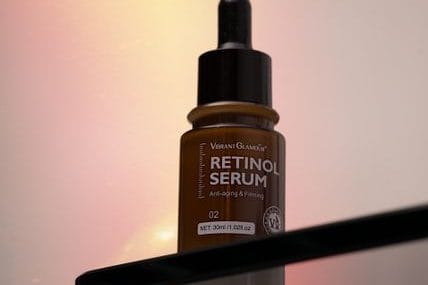
The method, popularized by New York dermatologist Dr. Whitney Bowe, runs on a four-night rotation: night one is exfoliation with an AHA or BHA, night two is retinol or retinoid, and nights three and four are recovery nights with nothing but moisturizer and maybe a ceramide cream. Then the cycle repeats. The entire premise is that most people's skin doesn't need daily retinol or nightly exfoliation — it needs enough exposure to trigger cell turnover and collagen production, followed by enough downtime to actually repair the barrier those actives just disrupted.
Why the rest nights are the part everyone skips
Here's the part that gets ignored constantly: the two recovery nights aren't filler, they're the mechanism. Retinoids work by increasing cell turnover, which temporarily thins the outer barrier and makes skin more reactive to sun, wind, and whatever new "brightening serum" showed up in your cart from a haul video. Skip the recovery nights and you get the redness, flaking, and stinging that most people blame on "sensitive skin" when it's really just retinol without a break. A plain moisturizer like CeraVe's PM cream or a $12 tub of Aquaphor on those nights does more for long-term results than another active ever would.
Does the schedule need to be rigid? No, and this is where skin cycling earns its retro-practical reputation rather than becoming another rulebook — Dr. Bowe herself has said the four-night cycle is a starting template, not a prescription, and people with more resilient skin can tighten the rotation while people who flush at the mention of glycolic acid should stretch the recovery nights to three or even four. The number that matters is your own skin's response, not the calendar.
Where dermatologists still don't agree
Not every dermatologist is sold on the framework as a category. Some argue skin cycling is simply "using retinol correctly" repackaged with a catchier name for social media, and they have a point — good clinical guidance on introducing retinoids gradually has existed since the 1990s. Others push back that giving people a structured, low-pressure way to actually stick with retinol, rather than quitting after one bad flare-up, is worth the rebrand on its own. Both things can be true at once, and honestly, if a TikTok-friendly name gets more people using tretinoin correctly instead of applying it every night until their face peels, that's a win regardless of the marketing behind it.
Building your own four nights
- Night 1 — exfoliation: a BHA like The Ordinary's Salicylic Acid 2% Solution ($9.60) for oily or acne-prone skin, or an AHA like a glycolic toner for dry or dull skin
- Night 2 — retinoid: over-the-counter retinol (Differin adapalene 0.1%, around $13 at most drugstores) or a prescription tretinoin if you're already established on one
- Nights 3 and 4 — recovery: cleanser, a barrier-repair moisturizer with ceramides, and sunscreen the following morning without exception, since retinol users burn faster
Layer a hydrating serum with hyaluronic acid on any night if your skin runs dry — that's not an active in the cycling sense, so it doesn't need its own slot, and there's no rule against using it every single night.
How long before you actually see anything
Most people quit an active ingredient right around the point it would have started working, which is somewhere between week four and week eight. Cell turnover from a retinoid takes roughly 28 days to complete one full cycle, so the fine lines, texture, and tone changes people are chasing don't show up in week two — what shows up in week two, if anything, is dryness and a little redness, and that's exactly the window where skin cycling earns its keep by not making things worse while you wait it out. Set a phone reminder for six weeks in before judging whether a product "isn't doing anything," because at three weeks you genuinely can't tell yet.
Photos help more than a mirror does. Take one under the same bathroom light, same time of day, once a week, and resist the urge to check daily — barrier repair isn't linear, and a rough Tuesday after four good days doesn't mean the routine has stopped working. It usually just means you were out in the wind, or you tried a new foundation, or Monday night's exfoliation night landed a little strong.
Who should skip skin cycling altogether
Rosacea-prone skin often does worse on any schedule that includes both an acid and a retinoid in the same week, cycling or not — for that skin type, a dermatologist visit before any active ingredient shopping spree is worth more than a TikTok framework. The same goes for anyone using prescription-strength tretinoin above 0.05%, which typically needs its own, slower introduction schedule set by whoever prescribed it, not a generic four-night template pulled from a video. And if you're already using a prescription regimen for acne that includes benzoyl peroxide, check with your provider before layering in an over-the-counter acid on top — the two together are a classic way to end up with a raw, peeling face by Thursday.
The retro throwback nobody mentions
What's almost funny about skin cycling getting treated as an innovation is that it's basically how skincare worked before the ingredient-of-the-week cycle took over. Drugstore routines from the 1990s were built around exactly two products doing real work — a retinoid cream at night, an exfoliating cleanser used sparingly, and everything else was just moisturizer and sunscreen. The twelve-step routine was the anomaly, not the norm, and it lasted about a decade before dermatologists started publicly pointing out that most people's skin barriers were paying the price for it. Skin cycling isn't reinventing skincare. It's undoing a specific, recent mistake.
Where it goes wrong
The most common mistake isn't skipping nights, it's stacking them — applying vitamin C in the morning, retinol at night, and a fresh exfoliating cleanser on top, then wondering why the skin barrier gives up by week two. Buy fewer products before you buy a stricter schedule. A person with three well-chosen bottles doing skin cycling correctly will out-perform someone with fourteen products doing all of them nightly, every time, and that's not a hedge — it's the actual clinical logic behind why this method works at all.
One more thing worth saying plainly: if you're pregnant or trying to conceive, skip retinoids entirely and talk to your doctor about alternatives like azelaic acid, regardless of how the cycling schedule is structured. No skincare trend overrides that.
The bottom line
Skin cycling isn't a discovery so much as a return — four nights, three ingredients, and the barrier repair that got skipped over during the decade of the twelve-step routine. Buy less, use it correctly, and give your face the two nights off it's been asking for since 2019.