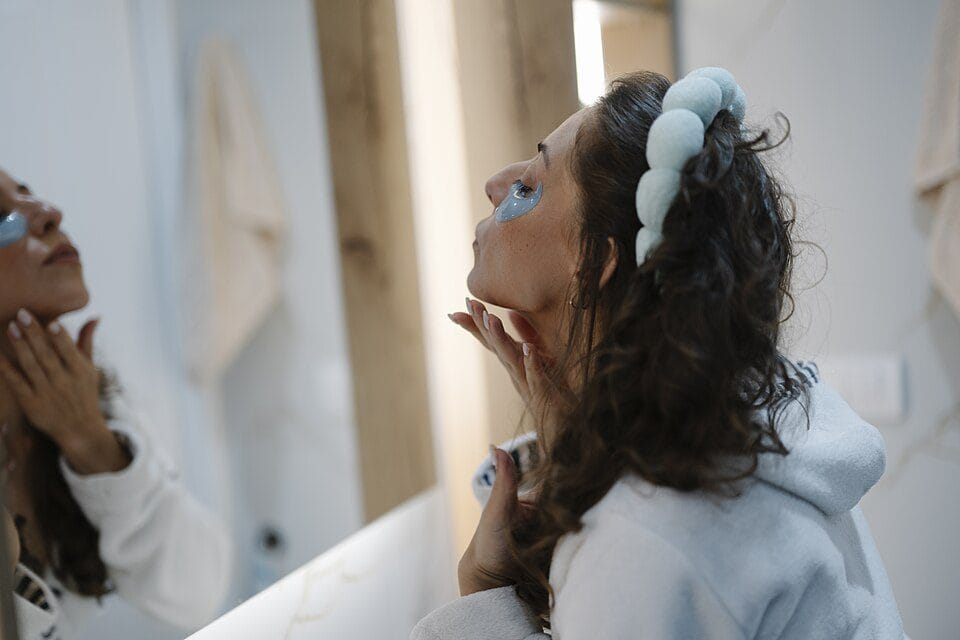
Look in the mirror under bathroom lighting instead of your phone's front camera, and August skin tells on itself. Texture that wasn't there in May. A patchy tan line that's really just uneven pigmentation. Breakouts along the jaw that showed up sometime after the third beach trip and never fully left. None of this is imagined, and none of it means your routine has failed — it means summer did exactly what summer does to a skin barrier, and most people don't touch their routine again until the leaves change.
What Actually Happened to Your Skin Between June and Now
Chlorine strips lipids the same way a harsh detergent strips a fabric's finish, and it does this every single time you swim, not just on the days you forget to rinse off after. Add in sweat sitting on the skin during outdoor workouts, sunscreen reapplied inconsistently (or not at all after the first hour), and air conditioning pulling moisture out of the air indoors, and you get a barrier that's been running a low-grade deficit for roughly twelve weeks straight, with almost no chance to recover fully between one exposure and the next. That deficit shows up as tightness after cleansing, patches that flake even though the rest of the face looks fine, and a general dullness that no amount of highlighter fixes because the problem is texture, not lack of shine. Dermatologists at practices like Dermalogica's clinical training centers describe this pattern constantly in late-August consultations — it's less a single event than an accumulation, which is exactly why a one-time deep treatment won't undo it. And unlike a single bad sunburn, which heals visibly within a week or two, this slow-drip damage rarely announces itself until someone finally switches from a phone camera to a proper mirror and notices texture that snuck up over ninety days.
Sun exposure compounds the barrier issue in a way that's easy to underestimate. UV damage doesn't just tan or burn — it triggers inflammation at a cellular level that keeps the skin's repair mechanisms working overtime for weeks after the exposure itself. So even if you were diligent about SPF 50 all summer, incidental exposure during commutes, dog walks, and lunch breaks on the patio adds up to real cumulative UV load. This is the part most routines skip entirely: everyone remembers to protect skin during the beach trip and forgets that the fifteen minutes walking to get coffee, five days a week, for three months, is its own exposure event.
The One Thing People Get Backwards
Most people's instinct in late August is to exfoliate harder, on the logic that scrubbing off the dead layer will reveal fresher skin underneath. Don't do that. A compromised barrier and aggressive exfoliation are a bad combination — you're stripping a surface that's already under-defended, and the result is usually more irritation, not less. Skip the daily scrub for the next two weeks. Let the barrier recover before you ask it to slough anything off.
Step One: Rebuild Before You Renovate
The reset starts with restraint, not more product. Drop any exfoliating acid — glycolic, lactic, salicylic — down to twice a week maximum, even if you were using it daily through summer. Replace your regular cleanser with something genuinely gentle: CeraVe Hydrating Cleanser ($15.99 at Target) or Vanicream Gentle Facial Cleanser ($11 at CVS) both skip sulfates and fragrance, which matters because fragrance is one of the most common irritants in a barrier that's already inflamed. This isn't a permanent downgrade. It's a two-to-three week reset before you bring the actives back.
What to Add Back, and in What Order
- Week one: cleanser + a plain moisturizer, nothing else, twice daily
- Week two: reintroduce a niacinamide serum (The Ordinary's is $6.50 and does the job) to calm residual redness and even tone
- Week three: bring back one active — retinoid or acid, not both — at half the frequency you used before summer
- Ongoing: SPF every single morning, rain or shine, indoors-all-day or not
Bringing the Retinoid Back Without Wrecking Your Progress
If retinol or a prescription retinoid was part of your routine before summer, don't just resume the old schedule. Retinoids increase photosensitivity, and a barrier that's already sun-stressed will react more sharply than it did in April. Start at once every third night instead of nightly, and hold there for two full weeks before increasing frequency. Differin (adapalene 0.1%) is available over the counter for about $13.99 and is a reasonable starting point if you're building a retinoid habit for the first time going into fall — it's gentler than prescription tretinoin but still clinically proven for texture and post-acne marks. Anyone already on tretinoin from a dermatologist should follow their prescriber's late-summer guidance specifically, since concentration varies enough between patients that generic advice isn't useful here. And if flaking shows up in the first week back on any retinoid, that's not a sign to push through it — buffer the product under a moisturizer instead of applying it straight to bare skin until the barrier catches up.
The Hydration Layer Everyone Underrates
A barrier that's lost lipids needs more than water — it needs actual fats put back. Hyaluronic acid serums get most of the attention because they're marketed as hydration heroes, but hyaluronic acid pulls water into the skin; it doesn't replace what chlorine and sun stripped out. Pair it with an occlusive. CeraVe Moisturizing Cream ($19.99, widely available at Target and Walgreens) contains ceramides specifically formulated to mimic what's naturally in the skin barrier, and Youth To The People's Superfood Air-Whip ($42 at Sephora or Ulta) works well for anyone whose skin runs oilier and doesn't want a heavy finish. Skip anything marketed purely as a hydrating mist for this job — mists feel nice but evaporate fast and can leave skin drier than before you sprayed if there's no sealant layer over them. Apply the serum to slightly damp skin and seal it in within sixty seconds, before the water on the surface has a chance to evaporate on its own.
Here's the part that surprises people: a slightly heavier moisturizer for two to three weeks is not going to cause breakouts if the formula is non-comedogenic, and most of the barrier-repair breakouts people blame on "rich" moisturizer are actually caused by the underlying inflammation, not the cream. That said, if you're prone to closed comedones along the jaw specifically, look for a moisturizer with squalane rather than heavier plant oils — squalane absorbs faster and sits closer to skin's own sebum composition, so it's less likely to feel occlusive in the way that triggers breakouts for oil-prone skin types. Sephora's own beauty advisors point people toward squalane serums for exactly this reason during late-summer consultations, layering it under a lighter lotion rather than a dense cream for anyone worried about congestion.
SPF Doesn't Get to Retire Just Because Summer's Ending
UV index in most of the continental US stays high enough through September and into October to cause real damage, and the drop in daily temperature has nothing to do with UVA exposure, which is the wavelength most responsible for the fine lines and dark spots people notice years later. EltaMD UV Clear ($41 at Dermstore or through a dermatologist's office) remains one of the most recommended mineral-leaning formulas for reactive or post-breakout skin because it includes niacinamide alongside the zinc oxide. Supergoop's Unseen Sunscreen ($38 at Sephora) is the better pick if you want something that layers invisibly under makeup without a white cast. Whichever one you choose, the daily habit matters more than the specific formula — reapplication during a full workday is unrealistic for most people, so a higher SPF in the morning application is worth more than a lower SPF reapplied inconsistently.
Rebuilding the Makeup Bag for Shorter Days
As the routine shifts, the base products worth keeping change too. Heavy, full-coverage foundations that felt necessary for a sun-damaged complexion in July stop making sense once texture starts improving — they settle into the exact fine lines and dry patches you're trying to treat. Switch to a tinted moisturizer or a lightweight serum foundation for the next month while skin recovers; it photographs and wears better on a barrier that's still healing than anything heavier will.
- Replace matte, long-wear foundation with a dewy or satin-finish tinted moisturizer for the transition period
- Swap a heavy setting powder for a light, hydrating mist-set combination instead of powder alone
- Keep concealer targeted and thin over any flaking areas — thick concealer over dry patches emphasizes texture rather than hiding it
None of this needs to be complicated or expensive to work. The two-week restraint period is the part people skip, and it's also the part that actually determines whether the rest of the routine has anything to build on.