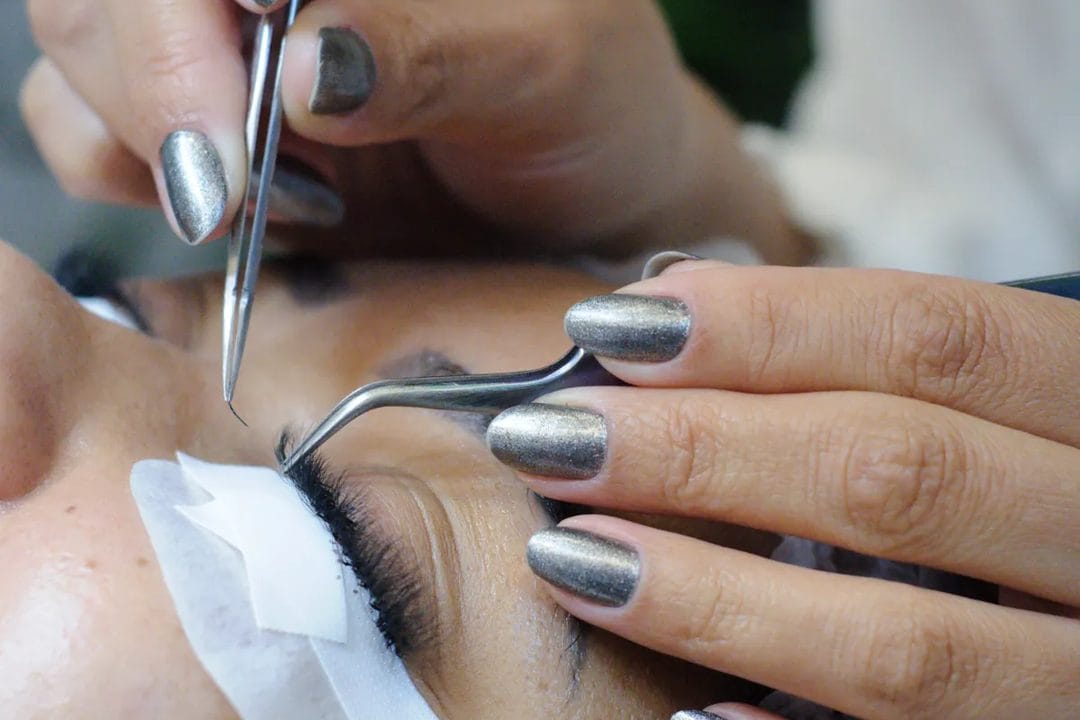
You've rebooked the same lash appointment three times this month, and you still can't say with a straight face which service you're paying for. Lift? Tint? A refill on extensions you got somewhere else? The confusion isn't yours alone — most lash menus list these three services side by side with almost identical wording, as if a $28 tint and a $260 full set of extensions were interchangeable ways to get the same look. They're not, and the gap between them shows up less in the mirror than it does in your calendar and your bank statement.
Here's the honest version of what each one actually involves, what it costs over a full year rather than a single visit, and which one holds up if your mornings already run tight.
The Real Cost Comparison, Twelve Months Out
A single visit price tells you almost nothing, because these three services run on completely different maintenance clocks. A lash lift with tint runs $65–$120 depending on the salon and holds for six to eight weeks — call it seven fresh sets a year, so roughly $600–$800 annually. A classic full set of extensions starts at $150–$300, but the real cost lives in the refill: $60–$90 every two to three weeks to keep the set looking intentional rather than patchy. Do that math across a year and you're at $1,800–$2,500, more if you go volume or hybrid instead of classic. Standalone tinting, without a lift, is the cheapest by a wide margin at $20–$40 a session and lasts four to six weeks — under $400 a year even if you never miss an appointment.
- Lash lift + tint: $600–$800/year, appointment every 6–8 weeks
- Extensions (classic to hybrid): $1,800–$2,500/year, refill every 2–3 weeks, plus a stricter cleansing routine
- Tint alone: under $400/year, appointment every 4–6 weeks, and honestly the one people forget to rebook because nothing visibly falls out
Extensions are the only one of the three where skipping a refill by even a week makes the whole set look worse than doing nothing at all — the newer lashes shed on schedule while the older ones cling on at odd angles, and that mismatch is the actual look people mean when they say extensions "grew out badly."
Lash Lifts: What You're Actually Signing Up For
A lift perms your natural lashes upward using silicone rods, similar in concept to a perm for hair, and it's almost always paired with a tint since untinted lifted lashes can look sparse under bright light. The appointment itself takes 45–60 minutes, there's no adhesive involved, and you can get it wet and touch your eyes normally starting the next day — a real advantage over extensions if you swim, wear glasses, or just can't stop rubbing your eyes when you're tired. Elleebana and Nouveau Lashes are the two kits most US salons train on, and asking which one your technician uses is a fair question; Elleebana's formula tends to give a tighter curl on shorter lashes, which matters if yours are under 6mm.
The one real limitation is that a lift can't add length or density. If your natural lashes are already sparse at the outer corner, a lift will make what's there look better organized, not fuller — for volume, you need extensions, full stop.
Who a Lift Actually Suits
Choose a lift if you already like your natural lash length and just want them to stop pointing straight down by 2pm. Skip it if your main complaint is thinness rather than direction — no amount of curling technique compensates for lashes that simply aren't there.
Extensions: The Upkeep Nobody Mentions at the Consultation
Extensions look flawless for the first four or five days. The catch is oil: your natural lid produces sebum constantly, and that oil breaks down lash adhesive faster than most technicians admit at booking, especially if you use an oil-based cleanser, retinol serum near the lash line, or sleep on your side. Salons quote a 3-week refill cycle because that's the manufacturer's stated bond life under ideal conditions, but if you're prone to oily lids or you're diligent about washing your face at night, you're realistically on a 10–14 day cycle whether the receipt says otherwise. Xtreme Lashes and Lavish Lashes are the two professional-grade adhesive brands most licensed techs in the US are trained on, and a tech using a bargain glue to cut costs is the single most common reason a $250 set sheds in nine days instead of three weeks.
Removal matters as much as application. Never pick or pull extensions off yourself — you'll take your own natural lashes with them, sometimes leaving bald patches that take two to three months to fully regrow. If you need them off before your next fill, book a professional removal appointment; most salons charge $15–$25 for it, which is cheap insurance against losing your real lashes for a season.
Classic vs. Hybrid vs. Volume
- Classic: one extension per natural lash, most natural look, gentlest on your own lashes
- Hybrid: a mix of classic and thin volume fans, the middle ground most first-timers land on
- Volume: multiple ultra-fine extensions fanned onto a single natural lash for maximum density — heaviest set, and the one most likely to cause premature shedding of natural lashes if your tech overloads a fan
Tinting: The Low-Commitment Option With a Regulatory Catch
Here's something most lash menus don't advertise: the FDA has never approved a color additive for dyeing eyelashes or eyebrows, which means every lash tint applied in a US salon is technically an off-label use of a product formulated for other purposes. That's exactly why reputable salons — and, in states like California, the licensing board itself — require a patch test at least 48 hours before your first tint appointment. Skip the patch test at your own risk; allergic reactions to the dye (usually a form of PPD-based colorant, the same family used in hair dye) can cause swelling severe enough to need an ER visit, and it's genuinely not worth the risk to save yourself a ten-minute test.
Assuming you've patch-tested and you're clear, tinting is the easiest of the three to live with day to day. There's no adhesive, no special cleansing rules, and no risk of losing your natural lashes to improper removal. Refectocil is the brand you'll see in most professional kits, and a session runs 15–20 minutes.
Which One Actually Fits Your Week
There's no universally correct answer here — only a correct answer for your actual bathroom-mirror routine and how much Sunday-morning maintenance you're willing to trade for Tuesday-morning speed.
If mornings are the problem — you're not going to curl your lashes before 7am no matter how much you intend to — a lift is the better choice. It solves the one thing mascara and curlers are trying to fix, at roughly a third of the annual cost of extensions, and it doesn't require you to change a single thing about how you wash your face. If density is the actual complaint and you're genuinely willing to build a 14-day refill habit into your calendar, extensions deliver a look nothing else on this list can match, but budget for the $1,800–$2,500 a year honestly before you book the first set, not after the third refill invoice surprises you. And if you just want your lashes to read as "done" without any of the above commitment, tint alone, patch test included, is the one nobody regrets.
Whatever you pick, ask your technician which specific product line they use before you sit down — Elleebana versus a no-name lift kit, Xtreme Lashes versus bargain adhesive, Refectocil versus an unlabeled tint bottle. The brand name on the shelf behind the chair tells you more about how the next six weeks will go than anything on the price list.