By 8:40 in the morning, the sidewalk outside a coffee shop in Queens is already sitting at 86 degrees with the dew point pushing past 70 — the kind of morning where a blowout survives about eleven minutes and concealer starts breaking up around the nose before the train even pulls in. This is what August does to a face. It's not that your foundation is a bad formula or that your technique slipped somewhere between the bathroom mirror and the front door; it's that most makeup gets developed and tested in air-conditioned labs, not on a subway platform during a heat advisory with 91% humidity and no breeze. Add sunscreen underneath, a tote bag digging into one shoulder, and a ten-block walk to the office, and by the time you sit down at your desk the T-zone has already gone shiny while the cheeks look faintly gray. None of that means the makeup was wrong for your face — it means it was wrong for the weather.
Heat alone isn't really the enemy. Humidity is the one doing the damage, because it keeps sweat and oil sitting on the skin instead of evaporating off it, and that moisture is exactly what breaks down pigment binders in foundation and eyeshadow. A 75-degree, bone-dry afternoon in Phoenix treats makeup completely differently than an 82-degree, soup-thick morning in Houston or New Orleans — same thermometer reading, wildly different result on your face by lunchtime. Once you start thinking about humidity instead of temperature, the whole routine below makes a lot more sense.
Skin Prep Decides the Outcome Before You Touch Foundation
Most humidity complaints actually start at the primer step, not the foundation step. A silicone-only primer feels great going on — that silky, poreless finish — but silicone alone doesn't grip skin the way it grips a dry, climate-controlled bathroom. Once sweat starts moving underneath it, a pure-silicone base essentially turns into a slip layer, and everything applied on top slides right along with it.
Reach for a grip primer, not a blur primer
Milk Makeup's Hydro Grip Primer ($34) works because it's water-based and tacky rather than silky, so it actually bonds to the skin surface instead of coating over it. For a drugstore option, e.l.f.'s Poreless Putty Primer ($10) does something similar for a fraction of the price — it's thicker and grabs onto foundation instead of letting it float. Skip anything labeled purely "blurring" or "smoothing" for August; those finishes are built for photos, not for four hours outside.
People with oily T-zones should also add a mattifying primer on the forehead, nose, and chin only — not the whole face — about ten minutes before foundation, giving it time to set before anything else goes on. Rushing this step is the single most common reason foundation looks perfect at 9 a.m. and patchy by noon.
Foundation and Concealer: What Actually Holds
Look for the words "24hr" or "waterproof" on the label, but don't stop there — check the finish. Maybelline's Super Stay 24HR Foundation ($12.99) is genuinely one of the most humidity-resistant drugstore formulas on shelves right now, and it holds up in testing far better than its price suggests. L'Oréal's Infallible 32HR Fresh Wear ($14.99) is the next step up if you want a slightly more skin-like finish without losing the staying power. On the higher end, Kosas's Revealer Concealer ($30) is worth the splurge specifically for under-eye work, because it's one of the few formulas that doesn't crease into fine lines once sweat gets involved.
Here's the part most tutorials skip: a fully matte, full-coverage formula is not automatically your best bet in humid weather. If your skin runs dry anywhere — cheeks, jawline, around the mouth — a heavy matte base can actually crack and separate faster than a satin finish, because it has nothing to move with once the skin underneath starts sweating. The safer play for most people is a satin or "natural matte" finish applied in a thin layer, built up only where you need more coverage, rather than one thick, uniform coat everywhere. Buffing with a damp sponge instead of a brush also helps, since a sponge presses product into the skin rather than laying it on top where sweat can lift it straight back off. And if you're only going to spend real money on one step in this whole routine, spend it on concealer, not foundation — a good concealer covers for a mediocre base far better than the other way around.
Setting Is Where Most People Lose the Look
Powder placement matters more than powder amount.
Translucent powder should go only where oil actually breaks through — usually the center of the forehead, the sides of the nose, and the chin — pressed in with a damp sponge rather than swept on with a fluffy brush. Laura Mercier's Translucent Loose Setting Powder ($47) is the industry standard for a reason, but e.l.f.'s Halo Setting Powder ($8) performs surprisingly close to it for anyone who doesn't want to spend nearly fifty dollars on powder. Powdering the whole face evenly, cheeks included, is what causes that flat, cakey look by mid-afternoon — it gives sweat more surface area to mix with, not less.
The two-pass setting spray technique
One spritz of setting spray is rarely enough for real humidity. Hold Urban Decay's All Nighter Setting Spray ($34) about eight inches from the face, mist once, wait thirty seconds for it to sink in, then mist a second time. That thirty-second gap matters — spraying twice back-to-back just creates a wet layer that reactivates the makeup underneath instead of sealing it. NYX's Matte Finish Setting Spray ($8) is a solid budget substitute and holds up almost as well through a sticky afternoon commute.
Eyes, Brows, and Lips That Don't Budge
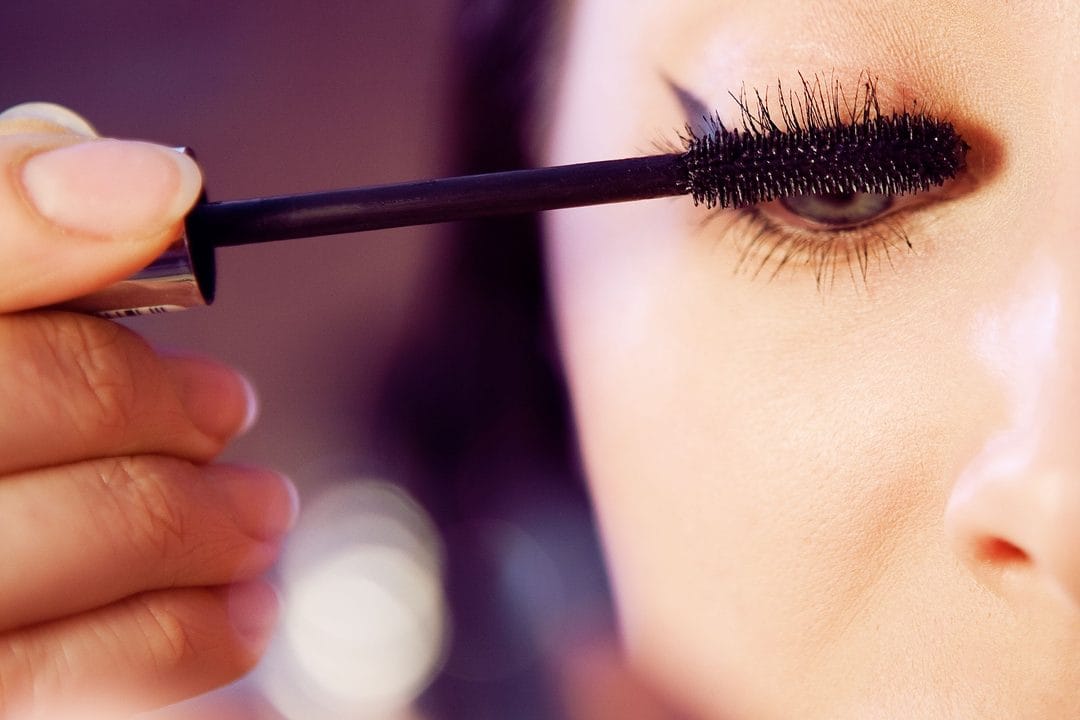
Waterproof mascara is non-negotiable in August — a regular formula will find its way under the eyes by early afternoon no matter how good the rest of the routine is. Milk Makeup's KUSH Waterproof Mascara ($24) genuinely does not smudge through a sweaty subway ride, though it does take a proper oil-based remover to get off at night, which is a fair trade. For brows, a tinted gel like Glossier's Boy Brow ($20) locks hairs in place without the flaking that some brow pomades develop in heat. Lip color is easiest of all to solve: a stain rather than a traditional lipstick, since stains sink into the lip itself instead of sitting on top waiting to transfer onto a water bottle or a mask.
The Touch-Up Kit Worth Carrying in August
A full reapplication mid-day almost always looks worse than a quick fix, because piling fresh foundation over sweat-broken makeup just creates texture. Carry blotting papers — Clean & Clear's original sheets ($4 for 50) work as well as anything pricier — and press, don't rub, on shiny spots before adding anything else. A travel-size setting spray and a single stick concealer cover almost every real touch-up need:
- Blotting papers for oil, used before any product goes back on top
- A small setting spray for a quick refresh over the whole face
- One stick concealer for under-eyes or a blemish that broke through
- Cotton swabs for cleaning up smudged liner, and honestly, a travel mirror helps too
Skip powder compacts for touch-ups if you can. Adding dry powder on top of a sweaty face is what creates that pale, ashy patchwork look by 4 p.m. — blot first, then decide if you actually need more product at all.
When Dewy Beats Matte
Fighting humidity toward a fully matte finish is a losing battle for a lot of skin types, and it's worth admitting that upfront instead of pretending one routine works for everyone. If your skin leans dry or normal, working with a satin or slightly dewy finish and reinforcing it with a light dusting of powder only in the T-zone will actually last longer than chasing full matte all day — because you're not fighting your own skin's natural finish, you're just controlling the parts that genuinely get oily. Oily and combination skin still benefit most from the matte, grip-primer approach described above, but even then, a little shine on the high points of the cheeks by late afternoon isn't a failure. It's just August.