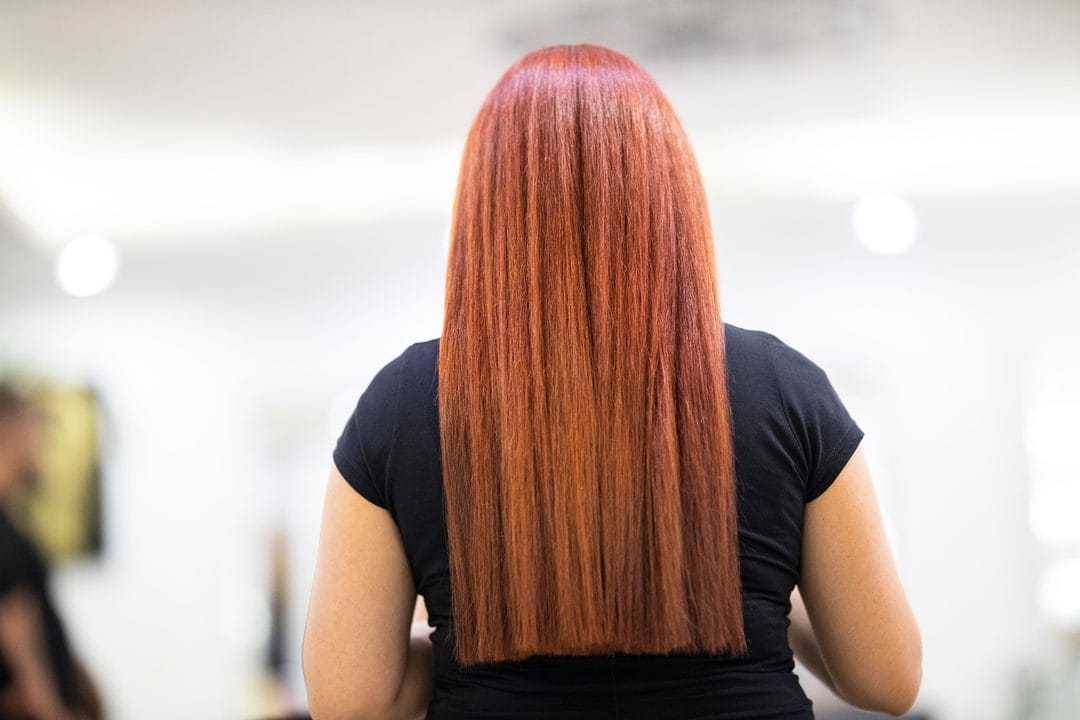
Your colorist mixes something that smells faintly of almonds, brushes it through your ends, and sets a timer for ten minutes. You didn't ask for a color change — you asked for your regular trim — but she slid it into the appointment anyway and called it "just a gloss." Six weeks later you're still getting compliments on hair you swear you haven't touched since.
That's the gloss effect, and it's become one of the most-requested add-ons in American salons this year without most clients ever understanding what it actually does. It's not a dye job. It's not a deep conditioner, even though it gets lumped in with "hair masks" on drugstore shelves. It's a specific, semi-permanent treatment that seals the hair's outer layer and reflects light in a way that regular conditioner simply can't, and once you know what it's doing, the $65 salon upcharge — or the $12 bottle in aisle nine — starts to make a lot more sense.
What Hair Gloss Actually Does (It's Not About Color)
Hair strands are covered in a cuticle layer that looks, under a microscope, like overlapping roof shingles. Color-treated hair, heat-styled hair, and hair that's just been through a humid Chicago summer all end up with those shingles lifted and rough, which scatters light instead of reflecting it back — that's the difference between hair that looks flat and hair that looks glassy. A gloss treatment uses a low- or no-ammonia acidic formula to smooth that cuticle layer back down and deposit a thin, temporary layer of pigment or clear polymer over it. The result reads as shine, but it's really a light-reflection fix, not a moisture fix.
This is the part most people get wrong at the drugstore: a gloss is not the same product category as a hair mask or a leave-in treatment, even when the packaging looks nearly identical. Masks like Olaplex No.3 or Briogeo's Don't Despair, Repair! work on the hair's internal bonds and moisture content. A gloss works almost entirely on the surface. You can use both in the same week and they'll do completely different jobs — but if you only have time for one before a big event, the gloss is the one that shows up in photos.
Salon Gloss vs. the $12 Bottle in Aisle Nine
Redken's Shades EQ is the treatment most colorists reach for, and it's the reason "can we add a gloss" has become a standard upsell at checkout — a single application typically runs $45 to $150 depending on hair length and your market, and it lasts four to six weeks before fading out with washes. It's a demi-permanent, ammonia-free formula, which is why colorists can layer it over your existing color without committing you to anything darker or more permanent.
At home, the category has exploded well past the old "clear glaze" options. Color Wow's Dream Coat Supernatural Spray ($28) is a leave-in, heat-activated version that seals frizz and adds shine without any color deposit at all — good for brunettes and blondes alike who just want the light-reflection effect. Kristin Ess's Signature Colour Gloss Kit ($24 at Ulta or Target) goes further, depositing a sheer tone while it smooths, which makes it useful for refreshing faded box-dye color between salon visits. And L'Oréal Paris's Le Color Gloss, an in-shower, five-minute toning treatment that runs about $13, is the closest thing to the salon effect you'll find without booking an appointment — it won't last as long as Shades EQ, but it's genuinely the best value in the category right now. IGK's Mixed Feelings Gloss Drops ($32) sit somewhere in between, formulated as a lightweight oil-serum hybrid you mix into conditioner rather than a stand-alone step, which makes it the easiest option to fold into a routine you already have.
Skip the ones that call themselves "gloss" but are really just tinted conditioners with a marketing refresh. If the ingredient list doesn't include a low-pH clarifying step or a bonding agent near the top, you're paying gloss prices for conditioner performance.
Who Actually Needs a Gloss Right Now
Anyone with color-treated hair is the obvious answer, since color processing is exactly what roughs up the cuticle in the first place. But the group getting the most out of this trend right now is brunettes and dark blondes coming off a summer of pool chlorine and salt water, which leaves warm tones looking brassy and dull under indoor lighting once September hits. A clear or cool-toned gloss corrects that without touching your actual color formula, and it's noticeably cheaper than asking a colorist to fix brassiness with a full toner service.
There's also a quieter use case that colorists rarely advertise: covering the first strands of gray without a full root touch-up. A demi-permanent gloss can knock back brassiness in gray regrowth and blend it into surrounding color for weeks at a time, which is a much smaller commitment than a full retouch and costs a fraction as much. Redheads, oddly, get less out of the category than any other group — red pigment fades fast under any acidic treatment, gloss included, so most colorists will talk a red client out of a clear gloss and toward a color-depositing one instead, like Moroccanoil's Color Depositing Mask ($34), which tops off the red tone at the same time it adds shine.
What to Look For on the Ingredient List
Not every product marketed as a gloss earns the name. The formulas that actually change how light bounces off your hair share two things: a low pH, usually somewhere between 3.5 and 4.5, which is what closes the cuticle back down, and either a film-forming polymer or a small-molecule bonding ingredient near the top of the ingredient list rather than buried at position fifteen. Dimethicone alone doesn't count — it coats the hair and fakes shine for a single wash, but it doesn't correct the underlying cuticle damage, and it can build up over time and leave hair looking oddly flat by week two.
Cationic surfactants (anything with "amidopropyl" or "trimonium" in the name) are a good sign, since they're what allow pigment or polymer to actually bond to damaged, negatively-charged hair strands instead of rinsing straight out. If a product's marketing leans hard on "glass hair" or "glossy" language but the ingredient list opens with water, glycerin, and a fragrance blend, you're looking at a standard conditioner with a trend-driven name change — not a real gloss.
How to Use an At-Home Gloss Without Wrecking Your Color
Read the timing on the box and then subtract two minutes the first time you use it — over-processing is the single most common mistake, and it turns a subtle tone correction into hair that looks distinctly purple or ashy under fluorescent light. Apply to clean, towel-dried hair, saturate the mid-lengths and ends first since those are the most porous and will grab the most pigment, then work through the roots last if the formula allows it.
Do a strand test on a hidden section near the nape before your first full application, especially if you're using a toning gloss over previously bleached or highlighted hair. Bleached strands are more porous and can absorb pigment unevenly, which is how people end up with a gray-toned gloss reading almost blue in one section and barely-there in another.
The One Thing a Gloss Won't Fix
None of this repairs actual damage.
A gloss smooths the cuticle temporarily and adds shine, but if your ends are splitting or your hair snaps when you brush it wet, that's a structural problem a surface treatment can't touch — you need a bond-building product like Olaplex No.0 or K18's Molecular Repair Mask, and realistically, a trim. Plenty of people layer gloss on top of damaged hair expecting a fix and end up disappointed within a week when the shine fades and the underlying texture is exactly where it started.
Used on healthy or moderately color-treated hair, though, the effect is genuinely worth the hype. It's the fastest, cheapest way to make hair look like it just came from a $200 salon appointment, and unlike most beauty trends that fade out by the next TikTok cycle, this one is backed by something closer to basic hair chemistry than marketing.
When to Book It (or Buy It)
Back-to-school photo season and the run of fall events that follows make late August and September the busiest gloss-booking window of the year — colorists in bigger markets are already filling up appointment slots two to three weeks out. If your salon calendar doesn't have room, the at-home route genuinely holds up: start with the L'Oréal Paris in-shower version if you've never tried one, move up to Kristin Ess if you want more noticeable tone correction, and save Shades EQ for the next time you're already in the chair for color anyway.
Either way, don't wait for a special occasion to try it once. The difference shows up in ordinary daylight, on an ordinary Tuesday, which is honestly the best advertisement the category has.