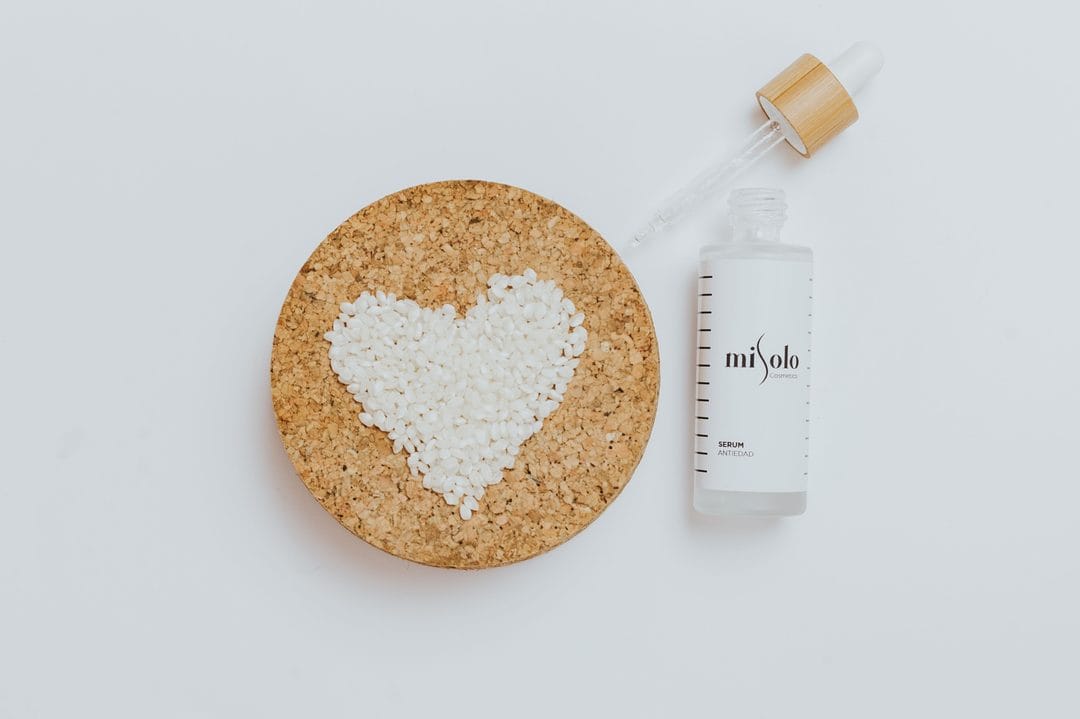
Walk into any Sephora or Ulta right now and you will find a shelf of pale, milky liquids promising the kind of glass skin that used to require a ten-step Korean routine and a flight to Seoul. The ingredient behind most of them is rice, but not the rice sitting in your pantry. It is fermented rice, and the difference between that and the rice water your grandmother might have swirled in a bowl matters more than most shoppers realize before they drop $32 on a bottle.
Why Fermented, Not Just Rice
Fermentation is not a marketing flourish tacked onto an old folk remedy. When rice sits with a specific strain of yeast or bacteria — the same process used to brew sake and make koji — enzymes break its starches and proteins down into smaller molecules: amino acids, peptides, and organic acids that skin can actually absorb instead of just sitting on top of it. Raw rice starch, by contrast, is a large molecule that mostly just sits on the surface and dries into a slightly tightening film, which is why plain rice water feels good for about twenty minutes and then does very little else.
SK-II built an entire prestige brand on this exact chemistry back in the 1970s, after a company scientist reportedly noticed that elderly workers at a sake brewery had remarkably smooth, young-looking hands despite spending their days in cold, wet conditions that should have wrecked their skin. That observation led to Pitera, the fermented yeast filtrate that still anchors SK-II's Facial Treatment Essence, a bottle that runs $99 for 75ml and $179 for the 230ml size most loyalists eventually upgrade to. Whether or not the brewery-hands story is the full scientific picture, the underlying mechanism holds up: fermentation byproducts include humectants, amino acids, and small amounts of niacinamide-like compounds that support the skin barrier in ways raw grain water simply cannot. It is also, worth saying plainly, one of the few prestige skincare price tags that has actual chemistry behind it rather than just packaging.
The DIY Rice Water Problem
Here is the part the TikTok tutorials leave out. The rice water method — soak a cup of rice for thirty minutes, strain it, splash the cloudy liquid on your face — does not ferment anything. It is just starch suspended in water, and it starts growing bacteria within a day if left at room temperature, which is exactly the timeframe most of these videos tell you to use it in. Dermatologists have flagged this repeatedly: unrefrigerated, unpreserved rice water is a genuinely poor choice to keep applying to your face beyond 24 hours, and even within that window it is doing far less for your skin than the fermented version sold in a bottle.
That is not to say the underlying instinct is wrong, exactly. Rice does carry real skin-supporting compounds, including ferulic acid and a modest antioxidant profile, and there are villages in rural China where women have used rice water rinses on their hair for generations with visibly strong results. But hair and facial skin are different tissues with different absorption needs, and the leap from "this works on hair over decades of use" to "splash raw starch water on your face this week" skips a few steps that a controlled fermentation process actually solves.
What Fermentation Actually Produces
- Amino acids and peptides broken down from rice protein, small enough to penetrate the upper layers of skin
- Kojic acid, a natural byproduct of the same Aspergillus oryzae mold used in sake and miso production, which has a real, published track record as a mild skin-brightening agent
- Organic acids that gently lower the pH of a finished product to the 5.0–5.5 range skin actually prefers — something raw rice water, sitting close to neutral pH, does not do on its own
- Trace niacinamide and adenosine, depending on the fermentation strain, and a shelf life measured in months rather than the one day a DIY batch survives without a preservative system
Building a Routine Around It
Start with a toner rather than a serum. It is the cheapest entry point and the easiest to judge on your own skin before committing to anything pricier. I'm From Rice Toner, about $32 at Sephora and Soko Glam, lists fermented rice water as 66 percent of the formula and has become something of a cult object on skincare forums precisely because the texture is watery enough to layer under three or four more products without pilling. Pat it in with your palms rather than a cotton pad — wiping wastes product and does nothing extra for absorption.
From there, an essence is the natural next layer, and this is where the K-beauty method known as the "Pitera pat" comes from: pressing the liquid into skin with warm palms rather than swiping it on with a pad, which supposedly improves absorption, though the honest answer is that nobody has published rigorous data proving palms beat cotton by any measurable margin. Missha's Time Revolution First Treatment Essence, around $44 and built on a fermented-yeast base similar to SK-II's, is the value pick most beauty editors point to when someone balks at the SK-II price tag. Save the serum step for mornings if brightening is the goal — Beauty of Joseon's Glow Deep Serum, roughly $17 and formulated with rice extract alongside alpha-arbutin, is worth every cent and genuinely punches above its price point. It is one of the few budget K-beauty products that actually outperforms items three times its cost, and it deserves the hype it gets on r/AsianBeauty and TikTok alike.
Sunscreen the next morning is non-negotiable, full stop.
Skip layering more than one fermented product with a retinoid or a strong exfoliating acid on the same night, at least at first. Fermented ingredients are gentle by most standards, but the organic acids they naturally contain can stack with an AHA or BHA in ways that leave sensitive skin red and tight by the third day — a pattern dermatologists see often enough among new K-beauty converts who try to combine every trending step at once. Introduce one fermented product, wait a full week, and only then decide whether your skin has room for a second.
Sake itself has been made the same way for roughly a thousand years, and it is worth pausing on that: this is a genuinely old fermentation method dressed up in a modern serum bottle, not a lab invention chasing a trend cycle. The skincare industry just caught up to what sake brewers noticed generations ago about their own hands. Then I Met You leans hard into that history with its Fermentation Essence, around $48, which uses a similar rice-and-yeast base fermented for weeks before bottling — slower, and priced accordingly, but a genuinely different texture from either the SK-II or Missha options, thicker and slightly tacky in a way that some combination-skin users prefer for winter.
Who Should Actually Try This
Fermented rice products suit dry, dull, and combination skin especially well, since the amino acid content supports barrier function without the heaviness of a cream-based routine. Anyone dealing with active fungal acne should be more cautious, since yeast-derived ferments like Pitera can, in rare cases, feed the same Malassezia yeast responsible for fungal breakouts — not a reason to avoid the category outright, but a real enough edge case that a patch test along the jaw for three days before committing to the full face is worth the ten minutes it takes.
The trend is not going anywhere this year, and the reason is straightforward: fermentation gives brands a genuinely different mechanism to sell rather than another vitamin C serum with a new name stapled onto the same formula everyone else already carries. Buy the bottle, skip the pantry experiment, and give your skin two weeks before deciding whether the hype was worth it.