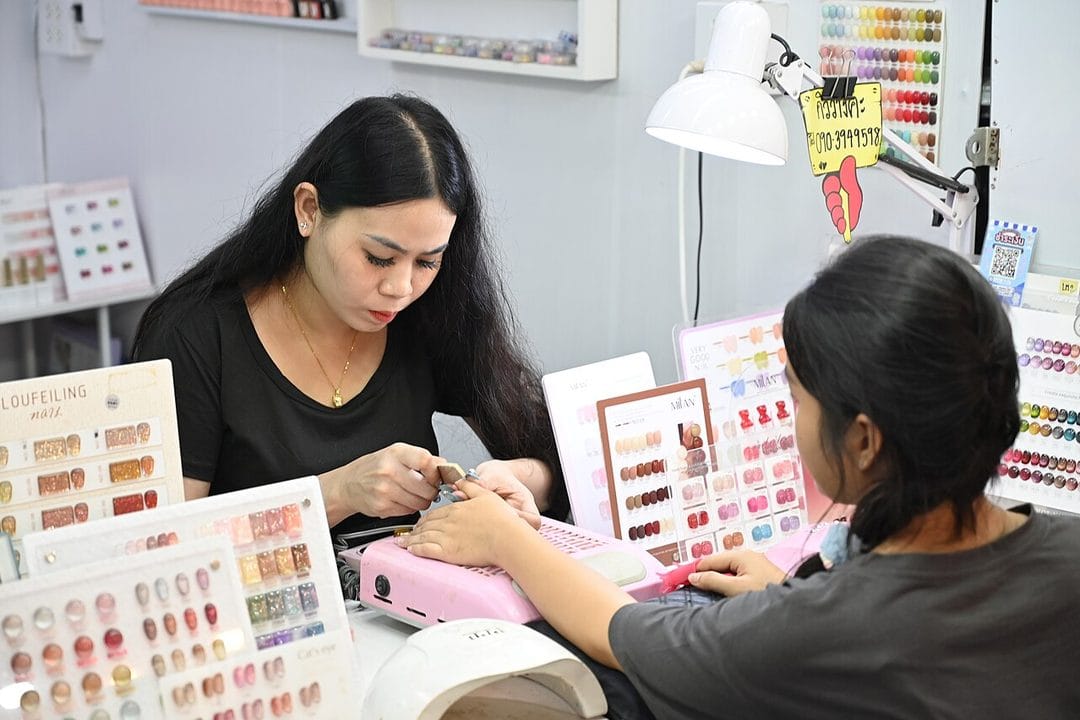
Walk into any nail salon in the first two weeks of August and you'll see the same scene at the color wall: someone standing there with a bottle of coral in one hand and a bottle of rust in the other, unable to decide which season they're actually dressing for. That hesitation is the whole story of nail color right now. The calendar says summer, the light outside still says summer, but the shade cards at Ulta and the salon menus in most cities have already started sliding toward warmer, deeper tones -- not because fall officially starts, but because manicures change roughly every three weeks and nobody wants to walk into September wearing the same bright coral they had on for the Fourth of July.
Why August Nails Look Different This Year
Manicures move faster than clothing trends because they're cheap to change and impossible to ignore -- your hands are in view during every meeting, every dinner, every phone screen you touch. That turnover means the color wall reacts to the actual weather forecast almost in real time, not to a fashion calendar set six months ahead. Right now, the transition is showing up as a specific kind of warm neutral: colors that read as "still summer" in bright sun but shift toward "already fall" under indoor light. Think terracotta instead of true orange, a deep rose instead of bubblegum pink, a warm caramel instead of plain nude. OPI's Nomads at Heart and Essie's Wild Nudes line are both selling through faster than their usual midsummer pace, and colorists at chains like Paintbox and the retail counters at Olive & June are reporting the same request over and over: something that will still work in October.
Butter Yellow Is Fading, Amber Is Stepping In
Butter yellow had its run from March through July, and it's genuinely done now. The undertone that made it feel fresh in spring reads slightly dated by late summer, the way a spring jacket looks out of place on a 90-degree day even though the temperature hasn't changed the calendar. Amber and honey tones are the direct replacement -- same warmth, deeper saturation, and they photograph better against a tan that's had all summer to develop.
The Colors Actually Working Right Now
A few specific shades are carrying most of the transitional demand this month, and colorists across several chains are naming almost the same four independently of each other.
- Terracotta and burnt orange -- OPI's "It's a Piazza Cake" and Chanel Le Vernis in Nightlife both read warm without tipping into full Halloween-orange territory.
- Deep mauve, which does something almost no other color does well: it works over a tan, over pale August skin that never quite caught sun, and over a French tip base without needing a different formula.
- Espresso brown, worn glossy rather than matte -- Essie's Coat Check is the version most colorists reach for because it doesn't go muddy under a gel top coat the way some browns do.
- A warm, slightly dirty white -- not the bright milky white that dominated early summer, but something closer to bone, like Sally Hansen's Bare It All, plus a handful of near-identical dupes now sitting on the same drugstore shelf.
None of these require abandoning a bright color entirely. Pairing a single bright accent nail, usually the ring finger, with a transitional base is the easiest way to wear both seasons at once without committing to either one prematurely.
What to Skip Between Now and Labor Day
True neon is the one category worth retiring early this year.
Not because it looks bad, but because it photographs wrong against September light -- the same electric coral that reads perfectly saturated under July sun starts looking slightly sickly under the flatter, cooler light of early fall, and most people don't notice until they see a photo two weeks later. Chrome and glazed-donut finishes are the other category to be careful with. They're gorgeous in a fresh set -- the mirror finish photographs beautifully for the first three or four days -- but the catch is that chrome powder shows wear faster than almost any other finish; a single chip at the tip is far more visible on a mirrored surface than on a matte or cream polish, and most people end up back at the salon for a fix within a week instead of the usual two to three. If you're getting a set done before a trip or an event, book it for the day before, not the week before.
Shape and Length: The Quieter Trend Nobody's Talking About
While everyone argues about color, the shape conversation has quietly shifted too. Almond and soft square are pulling ahead of the stiletto and coffin shapes that dominated spring -- largely a practicality issue, since almond and soft square hold up better through back-to-school routines, laptop typing, and the general return to a more scheduled fall calendar. Length is trending shorter as well, hovering around a quarter-inch past the fingertip rather than the half-inch-plus extensions that were common through June and July. A shorter, rounder shape also takes color better; deep tones like espresso and burnt orange can look heavy on a long, sharp extension, but they sit naturally on a shorter almond shape.
DIY vs. Salon: What Actually Makes Sense in August
A standard gel manicure runs $45 to $65 in most mid-size US cities right now, and that price hasn't moved much since spring despite general inflation across the beauty-service category. For a seasonal color like the transitional shades above -- something you might only wear for six to eight weeks before switching again -- that price makes sense if you're already going in regularly for maintenance. It makes far less sense if you're doing it purely to test a new color you're not sure about.
The better move for color-testing season is an at-home gel system. Olive & June's Mini Manicure kits run about $8 to $10 per polish and include a base and top coat that actually holds up close to two weeks without a UV lamp, which used to be the main gap between salon gel and drugstore polish. Static Nails and other press-on brands have also closed a lot of the quality gap -- a set now runs $16 to $18 and can look close to a salon set for a week or two of wear, which is more than enough time to figure out whether a color like espresso brown actually works for you before committing to it at the salon price.
The Ingredient Question Most People Skip Past
California's Safe Cosmetics Act requires any nail product sold in the state that contains formaldehyde, toluene, or DBP above trace levels to carry a Prop 65 warning label, which is why "10-free" and "7-free" claims started showing up on nearly every polish bottle over the past few years, including from brands that never used much of those ingredients to begin with. The distinction that actually matters is between polish and the gel systems built around UV-cured resins; gel formulas rely on methacrylate compounds that aren't covered by the same formaldehyde-focused labeling, and salons using them are supposed to follow ventilation standards that trace back to OSHA's general industry rules on chemical exposure rather than a cosmetics-specific regulation. Most well-run salons already have exhaust ventilation at each station for exactly this reason -- it's worth asking about if you're a regular gel client, the same way you'd ask about autoclave sterilization for tools.
A Realistic Way to Transition Without Redoing Your Whole Kit
You don't need to throw out a summer color collection to make this shift work. The easiest transition is dropping one shade -- usually whatever bright coral or hot pink got the most wear in July -- and replacing it with a single deep neutral like terracotta or espresso, then building outward from there as the weather actually cools rather than as the calendar dictates. Keep one bright color in rotation for the accent-nail trick, skip the chrome unless you're getting a fresh set within 48 hours of when it needs to look perfect, and size down your extensions if you've been wearing anything past a quarter-inch. The shift from summer brights to fall depth isn't a hard cutover anyway -- it's the same slow overlap it is every year, just showing up about two weeks earlier on the color wall than most people expect.