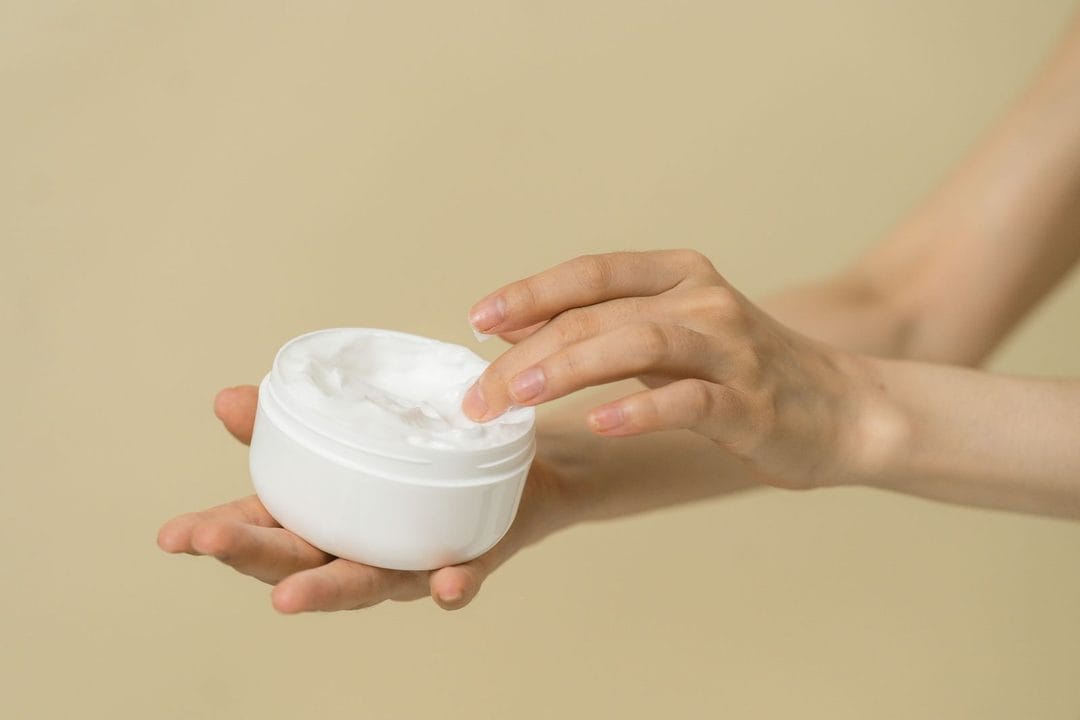
Your Summer Cleanser Just Stopped Working
Somewhere around Labor Day, the foaming gel cleanser that kept your skin matte and balanced through a sweaty, sunscreen-heavy August starts fighting you instead of helping. Your cheeks feel tight ten minutes after you rinse. The tiny flaky patches near your nose show up again. And the retinol you paused for summer sun exposure is about to go back into rotation, which means your skin barrier needs to be doing better, not worse, before you layer anything active on top of it. This is exactly the moment a decades-old, faintly ridiculous-sounding product keeps showing up in your For You page: cold cream, the thick, waxy, slightly old-fashioned cleanser your grandmother probably kept in a squat glass jar on her vanity. It looks nothing like the gel-cleanser era you grew up with, and that's sort of the point.
It's not a coincidence. Search interest and TikTok mentions of cold cream have been climbing steadily since 2023, and the trend has only picked up speed through 2026 as more skincare accounts frame it as the fix for exactly the kind of late-summer, pre-fall dryness described above. The pitch is simple: one product that removes makeup, lifts sunscreen, and leaves a thin veil of moisture behind instead of stripping your face down to nothing. Whether it deserves the hype is a fair question, and the honest answer is somewhere in the middle — genuinely useful for some skin types, mostly beside the point for others.
What Cold Cream Actually Is
Strip away the nostalgia marketing and cold cream is just an emulsion: water suspended in oil (usually mineral oil, sometimes a plant oil in cleaner reformulations) and held together with an emulsifier, traditionally beeswax or borax. Rub it into dry skin and the oil dissolves makeup, SPF, and surface grime the way any oil cleanser would. Wipe or rinse it off and the water content evaporates, leaving behind a residue of oil that sits on the skin rather than being washed away completely — which is the entire reason it feels so different from a foaming cleanser. There's no lather, no squeaky-clean tightness, and honestly no satisfying "clean" sound in the shower. It just melts things off.
The formal name is ceratum refrigerans, Latin for "cooling wax," a nod to the sensation you get when the water in the emulsion evaporates against your skin. That cooling effect is the entire reason it's called "cold" cream in the first place — nothing about the product itself is temperature-controlled.
A Cleanser Older Than Your Great-Grandmother's Vanity
Cold cream isn't a TikTok invention dressed up as a throwback — it's arguably the oldest continuously used skincare formula on the market. The Greek physician Galen developed the original recipe around 150 CE while working in Rome, mixing olive oil, beeswax, and rosewater into an emulsion meant to soothe and cleanse skin. That basic ratio barely changed for the next seventeen centuries. Pond's, the brand most Americans still associate with cold cream, traces back to 1846, when pharmacist Theron T. Pond started selling a witch hazel extract in Utica, New York; the company didn't market a dedicated cold cream product until the early 1900s, once petroleum byproducts like mineral oil became cheap and stable enough to replace the olive oil in Galen's original formula. By the 1920s and '30s, cold cream removal — smear it on, wipe it off with tissue — was the standard nightly ritual for anyone wearing pancake makeup, which at the time meant most working actresses and a large share of ordinary women besides.
Why It Vanished for Forty Years
Cold cream didn't disappear because it stopped working. It disappeared because the entire beauty industry pivoted, starting in the late 1980s and accelerating through the 1990s and 2000s, toward foaming, sulfate-based cleansers that promised a squeaky-clean finish — the "if it doesn't foam, it's not really cleaning" era that dominated drugstore shelves for a generation. Oil-based anything got lumped in with "will clog your pores," a claim that made sense for people with genuinely oily, acne-prone skin but got applied indiscriminately to everyone. Cold cream ended up filed away as something your grandmother used, alongside cotton gloves and rollers — not incorrect, exactly, just incomplete about why she used it.
Why TikTok Brought It Back
Two separate trends converged to pull cold cream out of the drugstore's dusty back shelf. The first is double cleansing, the K-beauty-rooted habit of using an oil or balm cleanser to dissolve makeup and SPF before following with a water-based cleanser — cold cream slots neatly into that first step, and it's cheaper than most dedicated cleansing balms. The second is the broader "barrier repair" movement that's dominated skincare content since roughly 2022, where the prevailing wisdom flipped from stripping oil to preserving it. A generation that grew up being told to avoid anything greasy is now discovering that over-cleansed, over-exfoliated skin barriers are a real and common problem, and a thick, unfussy emulsion that leaves a moisture film behind suddenly reads as smart rather than old-fashioned.
There's a third ingredient here too, and it's not skincare science at all — it's nostalgia. Videos showing vintage Pond's tins, old magazine ads, or someone's grandmother's actual bathroom routine consistently outperform straightforward product reviews, and the "beauty was slower and more ritualistic back then" framing does a lot of the emotional work that gets a $9 jar of cold cream into a Gen Z shopping cart in the first place.
How to Actually Use It Without Wrecking Your Routine
Scoop out a dime-to-nickel-sized amount and massage it into completely dry skin — cold cream doesn't emulsify with water the way a proper oil cleanser does, so applying it to a wet face just makes it slide around without doing much. Give it a full sixty seconds of massage, focusing on any area wearing waterproof mascara or long-wear foundation, then remove it with a warm, damp washcloth or a few tissues rather than rinsing directly with water. Follow with your regular water-based cleanser if you're removing SPF or a full face of makeup — cold cream alone lifts the product, but it doesn't rinse away the residue the way a second, gentler cleanse does, and skipping that step is how people end up with a filmy feeling by midday. Use it as a standalone night cleanser on days you're bare-faced and just need to remove the day's grime, and it can genuinely replace your usual cleanser without any second step at all.
A short list of what it's actually good for
- Dissolving stubborn waterproof mascara and long-wear lip color without aggressive rubbing
- A gentler first cleanse before retinol nights, when your barrier is already compromised
- Dry, tight, post-summer skin that needs a break from foaming cleansers for a week or two
- Anyone who genuinely misses the ritual of a real nightly skincare routine — this one takes patience, and that's part of the point
Who Should Skip It
This is where the TikTok enthusiasm gets ahead of the science a little.
If you have oily or acne-prone skin, a heavy mineral-oil-based cold cream sitting on your face for a full minute before you wipe it off is a real risk for clogged pores and breakouts, especially along the jawline and forehead where most people already run oilier. Mineral oil itself is generally considered non-comedogenic in dermatology literature, but the thick, waxy texture of a traditional cold cream formula can trap sebum and dead skin underneath it if you're not following up with a proper second cleanse — which is exactly the step a lot of rushed nighttime routines skip. If your skin leans oily, look for a cold cream formulated with lighter plant oils instead of straight mineral oil, or just accept that this particular trend isn't built for your skin type and stick with a standard oil cleanser instead.
What to Buy: Drugstore vs. Indie
The original Pond's Cold Cream Cleanser is still on shelves at Walmart, Target, CVS, and Walgreens, running roughly $9 to $11 for a jar that lasts months of nightly use — it's the same basic formula that's been sold in that pink jar since the 1900s, give or take reformulations. If you want something closer to what a clean-beauty brand would build from scratch, expect to pay $30 to $45 for options from smaller, ingredient-forward labels that swap the mineral oil for jojoba or squalane and add botanical extracts, though whether that upgrade actually changes how your skin behaves is genuinely debatable at that price gap. For a first try, buy the $9 jar. There's no reason to spend $40 finding out whether a 2,000-year-old formula works for your face when the drugstore version is chemically almost identical to what dermatology-adjacent indie brands are charging four times as much for.
Fall is a reasonable season to actually test this out, since your skin is already shifting away from the oil-control routines that got you through August, and a cold cream cleanse is a low-cost way to find out whether your barrier wants something richer before the heat comes on and the air gets properly dry. Keep the jar in rotation two or three nights a week to start, watch how your skin responds over the following ten days, and adjust from there — that's a more honest test than a single dramatic "I switched my whole routine" video will ever show you.