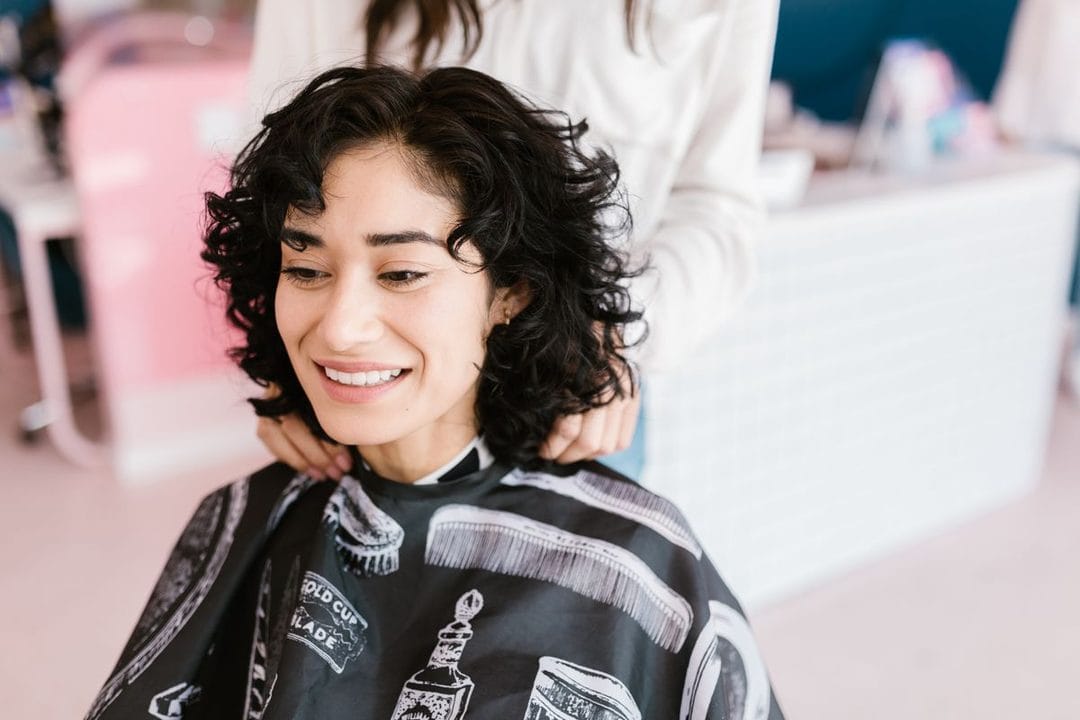
Book a perm appointment at most salons in September and you'll wait. Not because stylists are slammed with balayage touch-ups before fall — those slots are always open — but because the body wave, the loose, bouncy curl pattern that defined every prom photo between 1983 and 1989, has quietly become the most requested chemical service at salons from Los Angeles to Nashville. Search interest for "perm near me" climbed sharply through August, and stylists on TikTok have started posting waitlists instead of availability calendars.
This isn't the tight, crunchy perm your aunt got at the mall in 1987. It's softer, looser, and designed to look like your hair just has great natural texture — the kind of wave you'd get from sleeping in a braid, except it survives a shower and doesn't need fifteen minutes with a curling iron every morning. But the technique underneath is the same chemistry that's been reshaping hair since the 1930s, and it comes with the same risks if you rush it or try to save money in the wrong place.
Why the Perm Is Suddenly Everywhere Again
Part of it is fatigue. Anyone who's spent three years perfecting a beachy-wave routine with a curling wand knows the drill: twenty minutes every morning, a can of dry texture spray, and hair that falls flat by 2 p.m. anyway. A body wave perm skips all of that — you towel-dry, scrunch in a curl cream, and the shape is already there. The other driver is straightforwardly nostalgic. The same wave of 80s and early-90s fashion that brought back mom jeans and shoulder pads has worked its way into hair, and stylists say clients are showing up with screenshots of Jennifer Grey in Dirty Dancing and early Cindy Crawford campaigns rather than the crunchy, over-processed perms most people actually remember from that decade.
There's also a practical, seasonal reason this trend is landing in September specifically. Perms need calmer weather and lower humidity than a Southern or Midwestern summer typically allows — chemically processed hair is more porous right after the service, and it absorbs ambient moisture unevenly, which can turn a soft body wave into frizz within a week. Early fall, once humidity drops and before winter's dry indoor heat sets in, is close to the ideal window. Stylists at chains like Great Clips and Ulta's in-house salons say they see a real uptick in perm bookings every year between the first week of September and mid-October, and this year's numbers are running well ahead of 2025.
What "Body Wave" Actually Means Versus the Perm You're Picturing
Rod size is the entire story here, and it's worth understanding before you sit down in the chair. A classic 80s perm used small- to medium-diameter rods, which produced a tight, springy curl close to the scalp — dramatic, but also the look that ages a photo instantly. A body wave uses large rods, sometimes combined with a "spiral" or "root" technique that only processes the mid-lengths and ends, leaving the first two or three inches near your scalp untouched. The result reads as movement and volume rather than curl, which is why it photographs as "your hair just does this" instead of "you got a perm."
Ask your stylist specifically for a body wave or a loose spiral perm using jumbo or extra-large rods — most salons stock rod sizes from 6mm up to 25mm, and anything above 16mm is generally what you want for this look. Bring a reference photo. "Wavy" means different things to different stylists, and the gap between what you picture and what a size-10 rod produces is the single most common reason people leave a salon disappointed.
The Salon Version: What to Ask For and What It Costs
Pricing and timing
A body wave perm at a mid-range salon runs $150 to $300 depending on hair length and thickness, with long or very thick hair pushing toward the top of that range because it needs more rods and more processing solution. High-end salons in cities like New York or San Francisco can charge $400 or more, especially if the service is bundled with a precision cut afterward, which most stylists recommend anyway since perms process unevenly on damaged or overly long ends. Budget an appointment slot of two and a half to four hours — this is not a service you can squeeze in on a lunch break, and rushing the processing time is exactly how perms end up frizzy or, worse, chemically damaged.
Deva Curl-trained stylists and salons specializing in curl work tend to charge a premium but are generally worth it if you can find one nearby, because body wave technique is closer to curl-pattern design than to old-school perming, and not every stylist who "does perms" has kept that skill current. Ask directly: how many body waves have you done in the last six months? A stylist who mostly does color and cuts but occasionally offers perms is not who you want handling virgin, chemically untouched hair with a strong ammonium thioglycolate solution.
The At-Home Route: Can You DIY This Safely?
Home perm kits still exist — Ogilvie sells a body wave kit for around $12 at most drugstores, and it will genuinely put a wave in your hair. Whether it's a good idea depends entirely on your hair's current condition. If your hair is color-treated, previously bleached, or has any chemical history in the last six months, skip the box kit entirely. Perm solution and bleach damage compound each other, and a home kit gives you none of the mid-process check-ins a stylist uses to catch over-processing before it turns into breakage.
Here's the part most home-perm tutorials gloss over: rod placement is the hardest part of the entire process, and it's nearly impossible to do evenly on the back of your own head without a second pair of hands. A slightly uneven perm from a salon still looks intentional because the stylist can correct sections as they go; an uneven DIY perm on the crown or nape usually looks like an accident, and there's no fixing it except growing it out or committing to a much shorter cut. If you're set on doing this at home, recruit someone with steady hands, section your hair into at least eight to ten parts before you start, and don't attempt it on hair longer than shoulder length your first time.
Protecting the Wave Once You Have It
Freshly permed hair needs 48 hours before its first wash — wetting it too soon, even just to rinse, can relax the curl pattern before it's fully set. After that, switch to a sulfate-free shampoo; Redken's Curvaceous line and Bumble and bumble's Curl line are both formulated for chemically curled hair and won't strip the wave the way a clarifying shampoo will. Skip anything labeled "clarifying" or "volumizing" for at least the first six weeks, since both categories are built to strip buildup and will take the curl bond with it. A weekly bond-repair treatment matters more here than for almost any other chemical service. Olaplex No. 3, used once a week for the first month, measurably reduces breakage in perm-processed hair — it's the same technology that made bleach-and-tone color corrections survivable for the last several years, and perms put comparable stress on the hair's internal bonds. Leave-in curl creams from Ouidad or DevaCurl reinforce the pattern between washes and cut down on the frizz that shows up around day three or four.
Skip the round brush and blow-dryer combo you might be used to. Diffusing on low heat, or air-drying with a microfiber towel instead of a cotton one, preserves the curl clump pattern that gives a body wave its shape — regular brushing breaks up the clumps and turns a wave into frizz by midday. Expect the perm to relax gradually over three to six months as new, unprocessed growth comes in at the root; most people get a root touch-up perm around month four if they want to maintain the look through winter.
Who Should Skip This Trend Entirely
Short answer: not everyone should book this.
Fine, thin hair generally holds a body wave beautifully and actually benefits from the added texture and apparent volume — this is one of the rare chemical services that's genuinely kinder to fine hair than it is to thick hair. Coarse, dense hair can work too, but expect a longer processing time and more careful rod sectioning. Where this trend gets risky is previously bleached or heavily highlighted hair. If your hair has been lightened more than two levels or you've had highlights refreshed in the last eight weeks, get a professional strand test before booking anything — a strand test, where the stylist processes a small hidden section first to see how the hair responds, costs nothing extra at most salons and can save you from a genuinely bad outcome.
Don't perm hair that's already showing signs of damage: noticeable breakage, gummy texture when wet, or ends that snap rather than stretch. A stylist worth trusting will tell you to wait and do a few weeks of bond-building treatment first, even if that means turning away a paying appointment. That's the stylist you want handling your hair, not the one who books you in same-day with no questions asked.